

The Score — Chapter 8: The Cold Edge
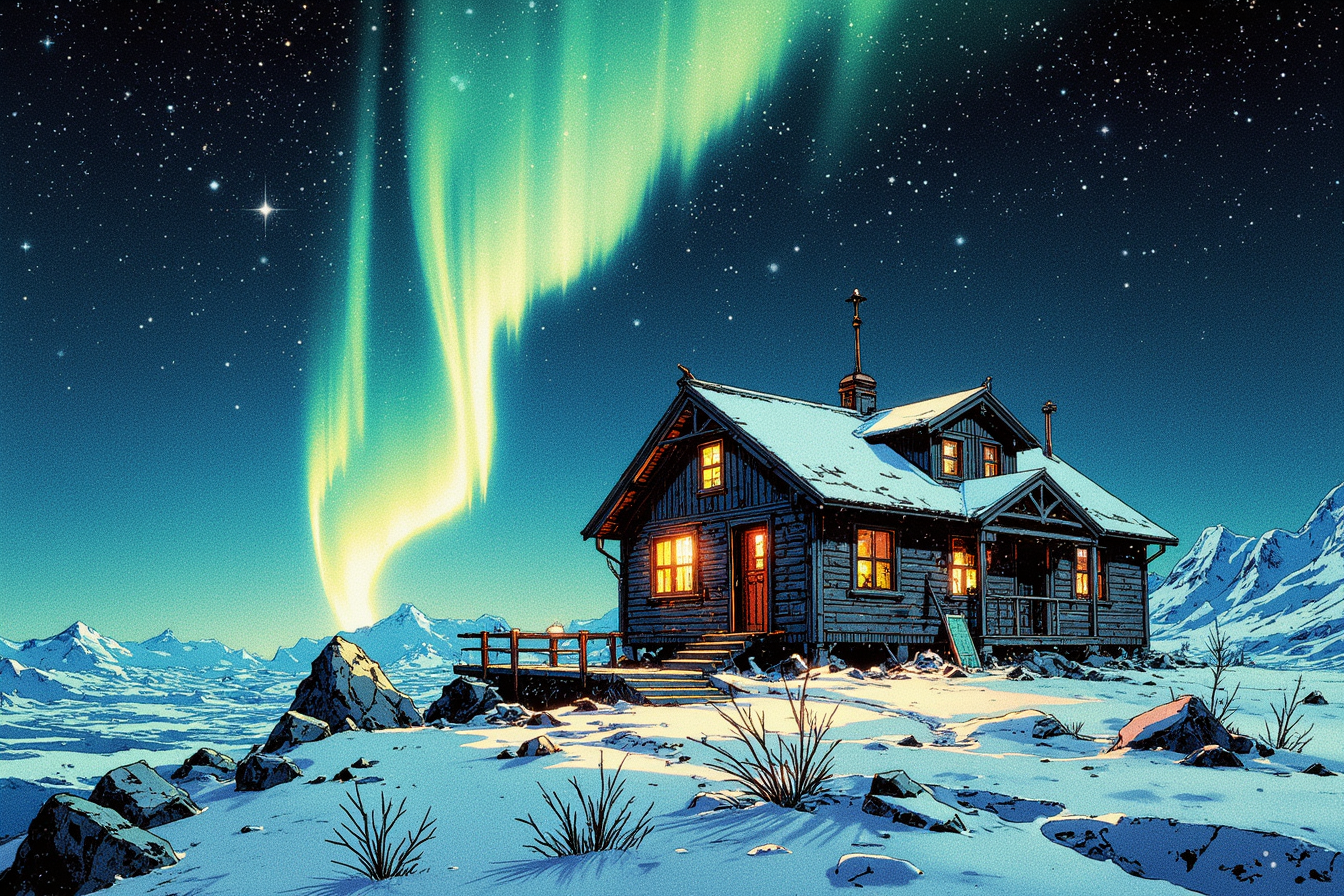
The Score — a novel of the planet Ephergent. Chapter 8 of 12.
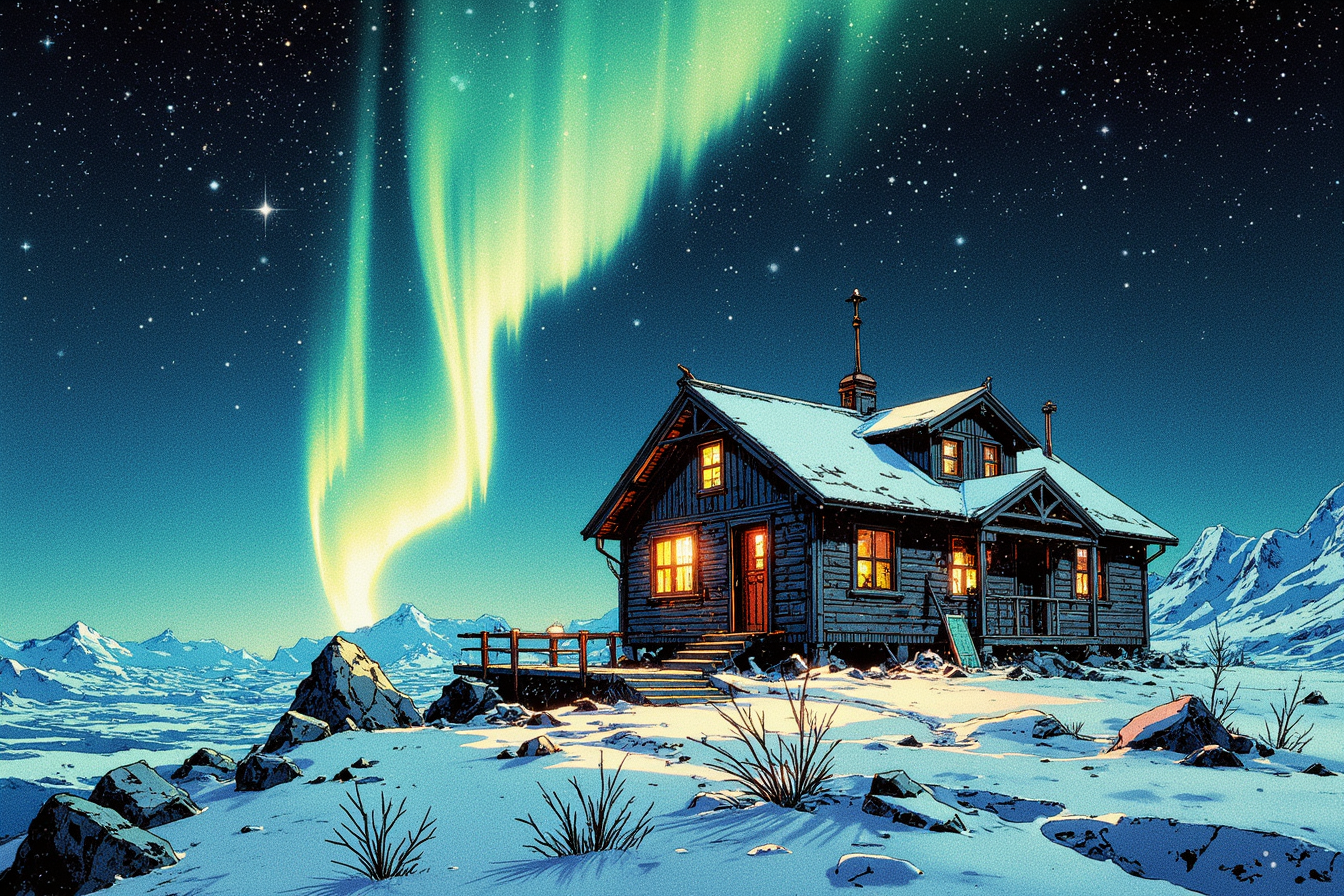
The green thinned the way a sentence thins when you reach the end of an idea: gradually, then all at once. By the second day out of the spire-clearing the trees were shorter and the light between them came through colder, and by the third day the understory had given up entirely and they were walking on low sedge over hard ground with the wind coming at them from the north in long unbroken pushes that carried no smell at all.
"That's Nocturnan air," Clive said, without turning around.
Chewy pulled his collar up. The air was thin and clean the way a blade is clean. It didn't taste like anything. It didn't carry pollen or dust or the green smell of rot. It was air that had been somewhere and come back empty.
"How far?" he asked.
"Relay's on the border itself. North-northwest of here, half a day if the wind doesn't argue."
"And if it does?"
Clive recalibrated the brim of his cap, pressed it down against the push. "Then we argue back."
ARC spoke from the collar-clip where it rode during daylight hours, voice flat and decimal. "Wind at nine point one meters per second, gusting to twelve point four. Bearing zero-zero-two degrees true. Recommendation: walk faster."
"That's not a recommendation," Chewy said. "That's just telling me what walking is."
"It's a calibrated observation," ARC said, "that happens to have the same practical output as a recommendation. The correlation is not my fault."
They walked into the wind for another hour, and the ground got flatter, and the sedge got shorter, and somewhere behind them the green ended entirely and the world became two colors: the pale ground and the pale sky, and the line where they met was so straight it looked drawn.
The relay station was a low stone building with a metal roof and a mast out front, and it sat exactly on the line where the map said the line was, which meant it sat on nothing. Chewy had expected a border to feel like something — a wall, a ditch, a change in the ground. It felt like nothing. The sedge on the south side of the building was the same sedge as on the north side. The wind crossed the threshold without caring.
Inside, the station was one room with a cot, a desk, a stove with cold ash in it, and a rack of instruments that Clive went to first and stood in front of for a long time without touching.
"Old relay gear," Chewy said.
"Prima-to-Prima relay," Clive said. "Used to run the line north from here to the Nocturna stations. Dead now. Everything past this building is dead."
"But the mast is up."
"The mast is up," Clive agreed. He took his cap off, looked at it, put it back on, and set the brim a half-notch lower than usual. "Doesn't mean anything's still transmitting."
Chewy set the pack down on the cot. The journal came out with it, and the box, and the boot, and he arranged them on the desk the way he'd started arranging them every night, which was the way Clive had arranged them in the crate, which was journal in the middle, box to the left, boot to the right, all three pointing north.
The margins of the journal were blank. The line that had resolved under the spire-light — if you're reading this at light, keep up. I'm sorry. Keep up anyway. — was gone again, the way everything in the journal went, folded back into the paper the moment the light that had shown it to him was gone. He'd stopped being surprised by that around the second day. The ink wasn't hiding. It was waiting for a specific kind of light, and the light wasn't the kind you could make with a stove or a lamp. It was the kind that came from the ground up.
"ARC," he said. "The cipher."
"Working." A pause that meant ARC was doing something it had been doing for three days in the background and hadn't mentioned. "The block from the third cache — the one you pulled from the boot-heel in Cupruma — I've been running it against Prima relay-encoding standards. It's not Prima-standard."
"What is it?"
"Unknown. But the structure is a substitution cipher with a key that appears to be a sequence of twelve. I've been assuming it was arbitrary until I had more of the block. I have more of the block."
"And?"
"The first four characters decode to: beyond sheets."
Chewy looked at the desk. The box was to the left of the journal. The boot was to the right. The wind was at the window.
"Sheets," he said.
"Ice sheets," ARC said. "Nocturna's ice sheets. The relay-station logs from the old Prima-Prima line refer to them as sheets. The word is in the station's own terminology. This is not a coincidence; the probability of coincidence is zero point zero —"
"Stop," Chewy said. "You don't have to give me the decimal when it's zero."
"Zero point zero is still a number," ARC said, "and withholding it would be a form of rounding, and I don't round."
Clive had turned from the instrument rack. He was looking at the desk, at the three objects arranged on it, and his face had the expression it got when he was reading a bearing he didn't like.
"Sheets," he said.
"That's what it says," Chewy said.
North. The journal had been north the whole time. The caches had been north. The waypoints had been north. But north on this map didn't stop at the edge of the habitable band, it kept going, into the place where the map got thinner and the ink got older and the only thing left on the page was the word Nocturna in letters that looked like they'd been written by someone whose hand was cold.
Chewy picked up the journal and held it under the window. The light coming through was the thin flat Nocturnan light, and it moved across the paper, and nothing resolved. He turned it. Nothing.
"It only comes when the spires give it," Clive said.
"I know."
"Then you know you can't make it happen."
"I know that too."
He put the journal back in the middle of the desk and went to the stove and built a fire in it with the last of the kindling they'd carried out of Verdanya, and the fire caught and the room got warm and the instruments on the rack stayed dead, and for a while that was the whole of it: three of them in a stone room on a line that wasn't a line, with a fire going and the wind outside doing what wind does when there's nothing in its way.
They ate the last of the Cupruma ration bars, which had gone soft and tasted like sweetened dust, and Clive made tea on the stove out of a tin he'd been carrying since Prima and which Chewy had never seen him open.
"You saved that," Chewy said.
"I saved that," Clive said. He poured it into three cups, which meant he'd been carrying three cups too, which meant he'd been planning for this room since before the crate. He gave one to Chewy, set one on the desk near the journal, and kept one for himself, and he drank his standing up, facing the window, the way a man drinks when he's watching for something.
Chewy took his cup to the window. Outside, the sedge ran north into the flat, and the flat ran into the horizon, and the horizon was the line where the pale ground met the pale sky and neither one moved.
"Clive."
"North-northeast and don't —"
"What's past the sheets?"
Clive drank his tea. He set the cup down on the sill. He touched his brim, pressed it, recalibrated it, and the brim went down another notch, which was the most Chewy had ever seen him move it.
"Nothing you need to know yet," he said, "and nothing I'm going to tell you if you ask again tonight."
"So there is something."
"I said there's nothing you need to know yet. That's a different sentence. Learn the difference."
Chewy drank his tea. It was good tea. It was the best thing he'd tasted in four days, and it was warm in his hands, and the room was warm, and the fire was going, and outside the wind pushed at the stone building and the building didn't move.
Tavo had come in an hour ago through the door, which he did by simply walking through it, because he was the size of a large dog and the door was a door and he had decided the threshold applied to other things. He was lying on the floor near the stove with his brow against the stone of the wall, and the seam along his spine was the deep amber of a low fire, and the stone under his brow was the same stone as the wall, and Chewy had stopped asking what Tavo was doing when he did this because the answer was always the same, which was that he was keeping something.
"ARC," Chewy said. "The ledger."
A pause. "Probability Hollis Chambers is alive: seven point nine percent."
"That hasn't moved."
"It has not moved," ARC said. "I note that the last three data points have produced no change in the estimate, which is itself a data point. I am not going to interpret it. I am a ledger."
"You're interpreting it right now."
"I am describing my own methodology. That is not interpretation. That is accounting."
Chewy set his cup down. The fire popped. The wind pushed. Somewhere out in the flat, past the relay station, past the line that wasn't a line, the ice sheets were doing what ice sheets did, which was sit there and be old and not care.
He slept on the cot and Clive slept on the floor and Tavo slept against the wall, and at some point in the night Chewy woke to a sound that wasn't the wind, and he lay there with his eyes open and listened to it, and it was a hum, low and even, coming up through the floor of the station the way heat comes up through a floor when there's a fire in the room below and there is no room below.
It wasn't loud. It was the kind of sound you feel in your teeth before you hear it in your ears, and it lasted for a while — he didn't know how long, because he'd drifted back before he could count — and then it stopped, and the silence after it was the kind of silence that has a shape.
In the morning, ARC said: "Did you hear it."
"I heard it."
"Then we both heard it. I'll note it."
"Note what?"
"That something woke."
Chewy sat up. The fire was ash. The room was cold. The window showed the same flat pale nothing as the night before, except — he went to the window and looked north, and the horizon was the same horizon, but there was a light on it.
Not the sun. The sun was behind them, south, still low. This was on the northern horizon, a thin band of pale gold sitting just above the line where the ground met the sky, and it was the wrong color for sunrise and the wrong shape for a cloud and it was moving, slowly, from west to east, the way a wave moves when it's very far away and you're watching it from a shore.
"Aurora," Clive said. He was already at the window, cap on, brim down, watching it the way he watched everything, which was like a man reading a bearing.
"It's daylight," Chewy said.
"It's Nocturna," Clive said. "The sheets throw light. That's not aurora the way Prima does aurora. That's the ice doing something with the sun that's behind us."
The band of gold moved along the horizon, and as it moved it brightened, and as it brightened Chewy saw that it wasn't one band, it was several, stacked, and the stacking had a regularity to it that he recognized the way you recognize a pattern in a contour map, which was not by thinking about it but by seeing it all at once.
"Twelve," he said.
Clive looked at him.
"The bands. There are twelve."
Clive looked back at the horizon. He counted without moving his lips, which Chewy had seen him do before with survey lines, and then he touched his brim and pressed it and didn't say anything for a while.
"There are twelve," he said finally.
They stood at the window and watched the light move, and Tavo came and stood between them and put his brow against the glass, and the glass was cold, and the seam along his spine went from amber to a color Chewy hadn't seen it go before, which was the color of the light on the horizon, gold going pale, and the hum came back, faint, up through the floor, in the teeth.
Then the light on the horizon thinned, and the bands separated, and the twelve became a smear became nothing, and the northern horizon was the pale flat line it had been, and the sun was higher now in the south, and the room was just a room.
Chewy turned from the window. The journal was on the desk where he'd left it, in the middle, box to the left, boot to the right, all three pointing north, and the margin was blank, and the paper was patient, and the light that would show him what was written there was not the light that came through a window.
He picked up the pack and started loading it. Journal in the middle. Box on top. Boot under that. The weight settled on his back, the fifth day of it now, familiar the way a word gets familiar when you've said it enough times that it stops being a word and starts being a shape in your mouth.
Clive was already at the door. He had his kit on his shoulder and his cap on his head and his hand on the latch, and he was looking north, through the door, at the flat empty ground that ran to the place where the map got thin.
"North-northeast," he said.
"I know," Chewy said. "Don't argue."
He stepped out into the wind, and the relay station was behind him, and the fire was ash, and the cot was bare, and the desk had nothing on it, and the northern horizon was the pale line it had always been, except that now he knew what was sitting on the other side of it, waiting in the cold, twelve bands deep, and the journal was against his spine with the box on top and the boot under that and the whole of it pointed the same direction everything had been pointed since the crate arrived on the doorstep, which was north, and further north than he'd let himself think, into the place where the air came back empty and the light did something with the sun that the sun hadn't asked it to do.
The wind pushed at him and he pushed back, and the ground was firm under his boots, and somewhere behind him the spire in its clearing was dark and holding nothing, and somewhere ahead the sheets were throwing light at a sky that didn't need it, and the hum was in his teeth, faint, gone, back, faint, gone — a rhythm, he realized, not a sound, a tempo, the way a thing sounds when it's counting.
He walked north, and the light on the horizon stayed just out of reach the way it always does, and the line under his boots held its bearing, and the whole edge of the world was ahead of him now, cold and close and getting closer with every step.