

The Score — Chapter 5: The One That Stayed
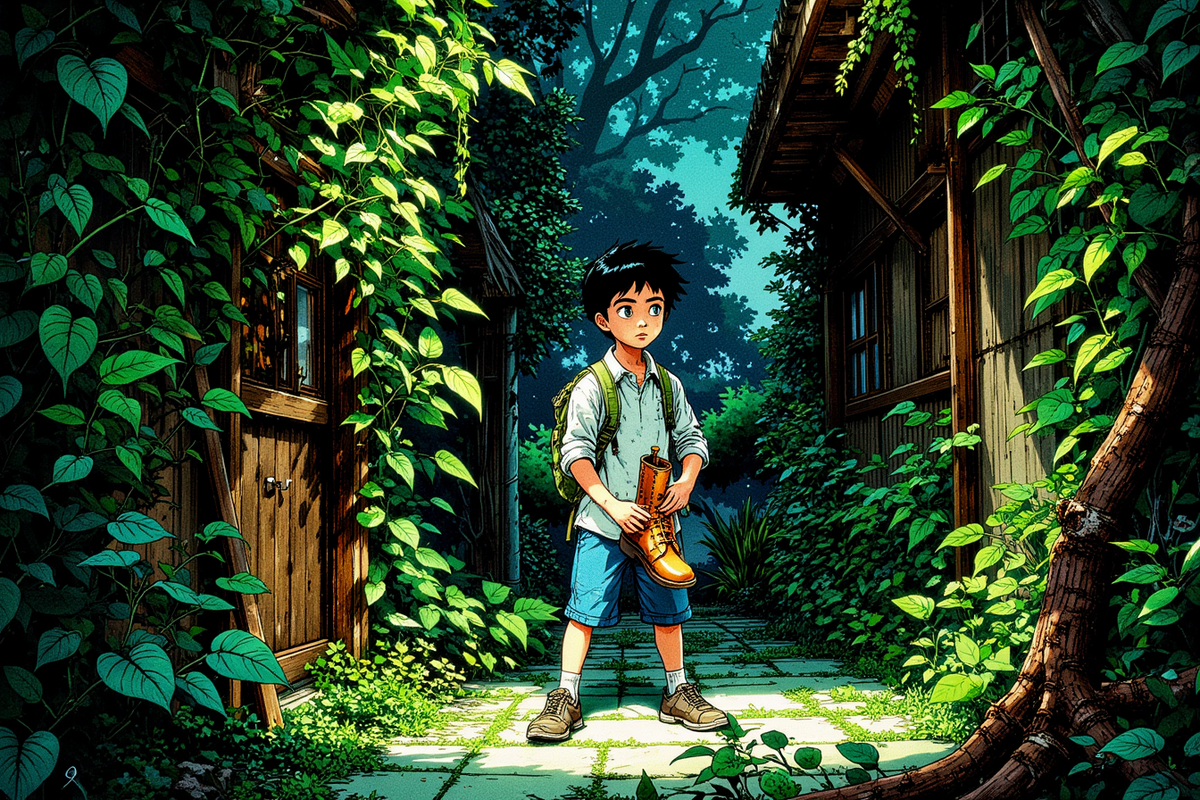
The Score — a novel of the planet Ephergent. Chapter 5 of 12.
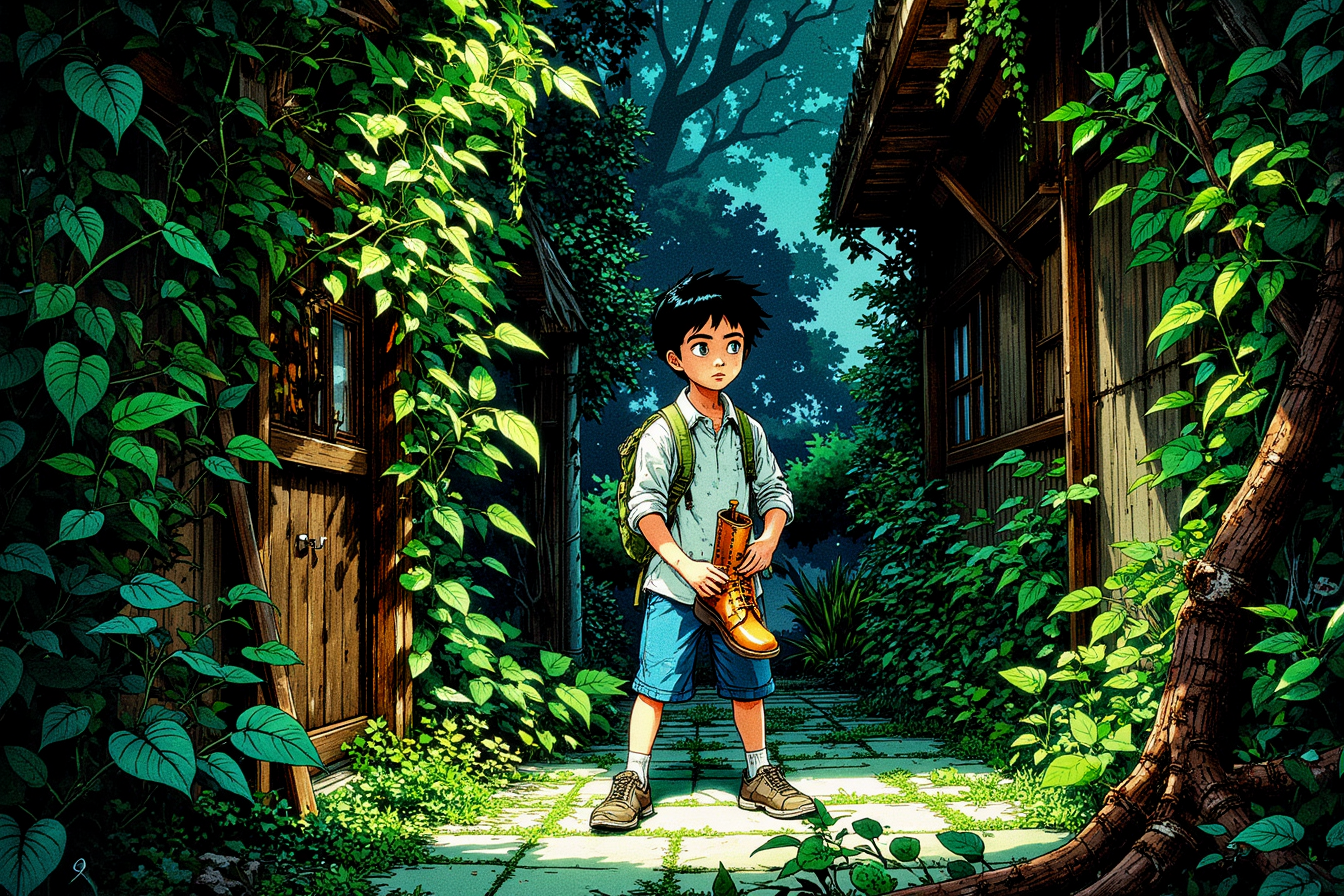
The junction was a crossroads with nothing at it, and the road north was a rut through scrub for the first mile and then the scrub got serious and then the scrub was trees.
That was how the Verdanya band began: not with a line, but with a wall. One step the sun was a white coin in a flat sky and the next the sky was gone and the light came through in green coins that moved when the canopy moved, and the road became a track, and the track became a suggestion, and the suggestion became the smell of wet bark and the sound of something small running away through leaves.
Chewy stopped. The heat hadn't changed but the air had — thicker, closer, like the difference between a room and a mouth.
"Verdanya," Clive said, as if announcing a station stop. He recalibrated his brim. "We'll want rope for the canopy stretches. We'll want to want it before we need it."
"You know this band."
"I know where it is." He pointed north with his chin. "Past the understory there's a waystation. Hollis's line runs through it. If the caches hold, it holds."
"And if they don't?"
Clive looked at him with whatever it was behind his faceplate that looked like patience. "Then we're walking further than we planned."
They walked into the green.
The first hour was the worst of it — the adjustment, where every step was a negotiation with root and mud and the pack's new weight riding high on his back. The journal rode against his spine with the box and the boot above it, and the boot had settled into the shape of his shoulder like it had been carried a hundred times before, and he kept thinking about Ma Delacroix's words: or don't. A fixed point doesn't check.
The light changed before the track did. It went from green coins to green water to something dim and even, like being inside a held breath, and the sounds got layered — insects underneath, birds above, something large and unhurried somewhere to the east that didn't bother to stop being large when they passed.
ARC spoke once, low in his ear: "Canopy density at ninety-two percent. Recommend pace reduction of twelve percent for footing." Then, after a pause: "Probability Hollis is alive: 7.9 percent. Ledger updated. No further comment."
"You always say that," Chewy said.
"It is always accurate."
By midday the track had widened into a cleared lane, and the clearing had edges, and the edges had posts, and the posts had a roof between them.
The waystation sat in a knot of light where the canopy had been cut back years ago — not recently, not with saws, but with the slow permission of a place that had been lived in. A cabin of dark timber. A rain-catch cistern with a pipe running into a stone trough. A root cellar door with a rope-pull. And a porch, wide and low, with two chairs on it.
Two chairs. Chewy counted them twice.
He stood in the lane with the sweat running down his back and the pack's straps cutting into his shoulders and he looked at the two chairs and something in his chest did a slow, quiet rearrangement.
Clive went around the back. Chewy went up the three porch steps and tried the door and it opened on a room that smelled of cedar and cold iron and lamp oil that had been put away properly a long time ago.
The room was provisioned.
Not for a season. Not for a stop. The shelves along the north wall were laid in rows — sealed tins with dates chalked on their lids, stacked four deep. Rope, coiled and waxed. A medical box with its brass corners still bright. A water filter with spare membranes in oiled cloth. Boots, three pairs, in a line by the hearth, each pair wrapped in newspaper that had gone the color of weak tea.
Chewy set the pack down by the door and walked the room the way he walked a map — slow, along the edges first.
The dates on the tins were the thing that stopped him. He read them twice, three times, moving his finger along the chalk marks without touching them. The earliest was six years back. The latest was —
He did the arithmetic. The latest was four months from now. Provisioned forward, chalked in advance, a full year of tins laid in by someone who had been standing here on a schedule.
He turned around. The room was quiet. The two chairs faced the hearth like they were waiting for a conversation to resume.
"Clive."
The automaton came in through the back door, bringing the smell of wet leaves with him. He looked at the shelves. He looked at the chairs. He recalibrated his brim, and the gesture, for the first time since the crate, looked less like a habit and more like a brace.
"He stocked it forward," Chewy said. "There's tins dated next year."
"Journal says he came through here often," Clive said. "A man who comes through often keeps a house."
"A man who comes through often doesn't chalk dates on tins for the year he won't be here."
Clive didn't answer that. He went to the hearth, checked the flue, found it clear, and stood with his back to the room for a moment that lasted one beat too long.
Chewy opened the pack. The journal came out with the box and the boot, and he set the box on the table and the boot beside it, and the boot sat there on the cedar tabletop, small and dark and scuffed at the toe, and he looked at it for a while.
He'd been carrying it since the waystation — since the first cache, the rations and the sketch of a boy at six and this boot, Hollis's first note home, the one he'd kept. Chewy had packed it without thinking about why. It was evidence. It was a waypoint's payload. It went in the pack.
Now it sat on the table in the waystation that had been provisioned for years, and the light through the window fell on it, and he picked it up.
It was light. It was a child's boot, leather gone soft with age, the sole worn thin at the ball. He turned it over. He put his thumb in the opening and felt the lining, worn smooth.
He put it against his foot.
That was the thing he hadn't done. He'd handled it, packed it, felt its shape settle into the pack's shape against his back, and he had never once done the obvious, stupid, obvious thing that a fourteen-year-old boy does with a boot, which is try it on.
It fit.
Not at six. Not the ghost of a fit, the way you fit into a photograph of yourself. It fit the way a shoe fits the foot it was broken in on — the arch found the arch, the toe box found the toes, the heel sat down and stayed. He stood in one boot on the cedar floor of the waystation and the room did the slow rearrangement again, harder this time, and he understood.
Hollis hadn't packed it because it was a keepsake. He'd packed it because he'd known. He'd known the boy he was writing to was going to be this size when he got here, and he'd packed a boot that would fit when the boy arrived, and he'd chalked the tins forward to the year the boy would need them, and he'd left two chairs by the hearth.
Chewy took the boot off. He set it on the table next to the box, and he stood there with one sock dark with trail dust and the other clean, and he didn't say anything for a while.
The jungle outside did its layered business. Something large and unhurried moved in the understory and went on being large.
"He knew," Chewy said. "He knew I'd come."
Clive was at the window. He didn't turn around. "The journal was written to be read."
"Not read. Followed." Chewy put his hand flat on the journal's cover. "He provisioned this place for whoever was carrying it. He knew what size I'd be. He knew when."
"Then he was a good cartographer."
"That's not cartography." Chewy's voice came out rougher than he meant it to. "That's a man setting a table for someone who hasn't walked in yet."
Clive turned from the window. The faceplate caught the green light and gave nothing back, but the cap came off his head and went back on, squared, and the gesture was slow.
"He came home once," Clive said.
The room got very quiet.
Chewy looked at him. "What?"
"Before the disappearance. He came home." Clive's voice had the flat, even cadence of a man reading coordinates off a page he'd read many times. "He was gone eleven months on the Verdanya line. He came back to Prima for eleven days. Then he went north again and did not come back the second time."
"You knew that. You've known that the whole — "
"I was under field orders."
"Whose field orders?"
The automaton's hands were at his sides. He recalibrated his brim. "The ones that packed me in the crate."
Chewy opened his mouth and closed it. The eleven days. Hollis had come home for eleven days, and in those eleven days he could have done anything — written letters, drawn maps, chalked dates on tins that wouldn't be opened for years, packed a boot for a nephew who was six years old and would be fourteen when the boot was needed. He could have measured a boy's foot from memory, or from the last pair he'd sent home, and ordered a boot, and broken it in, and put it in a cache on a trail through a jungle he had no reason to walk again.
Except he did have a reason. The journal was the reason. The journal was always the reason.
Chewy sat down in one of the two chairs.
It held him. The wood was worn smooth in the arms where hands had rested, and he put his hands where the hands went, and the fit was the same fit the boot had been, and he sat in the chair in the provisioned room in the jungle and breathed.
"Read me the ledger," he said.
ARC's voice came into his ear, dry as chalk: "Probability Hollis is alive: 7.9 percent. Unchanged since Cupruma. The chair does not move the number."
"I know the chair doesn't move the number."
"Then you asked because you wanted to hear it said."
Chewy almost smiled. "Maybe."
"The number is 7.9 percent. It is a scoreboard, not a verdict. I will update it when the data updates."
Outside, the light in the clearing shifted — a slow, broad movement, like a cloud passing over a sun that wasn't there. Chewy looked up. The canopy was a held breath, green and even, and through the gap where the waystation's clearing met the trees something was moving.
It came out of the understory low and built from the mountain's own stone, a border-collie shape at eye level with a seam of pale light running the length of its spine, and it stopped at the edge of the clearing and looked at the cabin with eyes that were not eyes but the place where eyes would be if the stone had wanted them.
"Tavo," Chewy said.
The Ephergent had been with them since the first cache — a presence at the edge of vision, a rumble underfoot that Chewy had learned to read the way you read weather. Alarm was a cold blue flash along the seam. Contentment was a faint vibration in the ground, like a held note. This was neither. The seam ran a slow, steady gold, and the thing walked into the clearing with the unhurried certainty of something that had been here before.
It crossed the porch. It did not look at Clive. It came through the open door and into the room and stopped in front of the table where the boot and the box sat, and it lowered its head, and it pressed its brow to the box.
The seam went bright — not blue, not alarm, not the cold flash — a deep, slow gold that pulsed once, twice, three times, and the ground under the cabin hummed, and every spire within a mile of the waystation lit.
Chewy felt it in his teeth. The hum of the hillside he'd been carrying since the first word resolved in the journal's margin, the hum that had followed him down the trail and across the flat and into the green — it was louder here, layered now with the tones of the spires outside, and the light through the windows went gold, and the journal on the table opened.
Not all of it. Not the score. A margin, one line, the ink resolving the way ink resolved under spire-light, slow and certain and meant, and Chewy leaned forward and read it in the gold:
if you're reading this at light, keep up. I'm sorry. Keep up anyway.
He read it twice. The words sat there, resolved, waiting, and the Ephergent lifted its brow from the box and stood in the middle of the room with the gold running its seam, and the spires outside held their tone, and the jungle went quiet in the way a room goes quiet when someone has said the thing they were always going to say.
"Keep up," Chewy said.
Clive was at the door. The cap was squared, the hands at the sides, the posture of a thing that has been standing at a north line for a very long time. He looked at the journal. He looked at the Ephergent. He looked at the boy in the chair with one dusty sock and the boot on the table beside him.
"The understory run starts at dawn," he said. "There's a waypoint hung in a giant tree two days north. If the ink keeps resolving the way it's resolving, we'll want to be under spire-light when it does."
Chewy looked at the line one more time. Keep up. I'm sorry. Keep up anyway. An apology and an order in the same breath, the way Hollis wrote everything, the way he set a table and chalked dates forward and packed a boot for a boy who wasn't there yet.
He closed the journal. The gold went out of the margin, but the words stayed — resolved, permanent, his — and he put the journal back in the pack with the box and the boot, and the boot fit the shape of the thing he'd been carrying, and the thing he'd been carrying had been a promise the whole time.
The Ephergent rumbled once, a deep contentment that Chewy felt in the floorboards, and walked back out through the door and into the green, and the spires outside dimmed one by one, and the clearing went back to its coins of light, and the two chairs by the hearth faced the empty room, waiting for the conversation to continue.